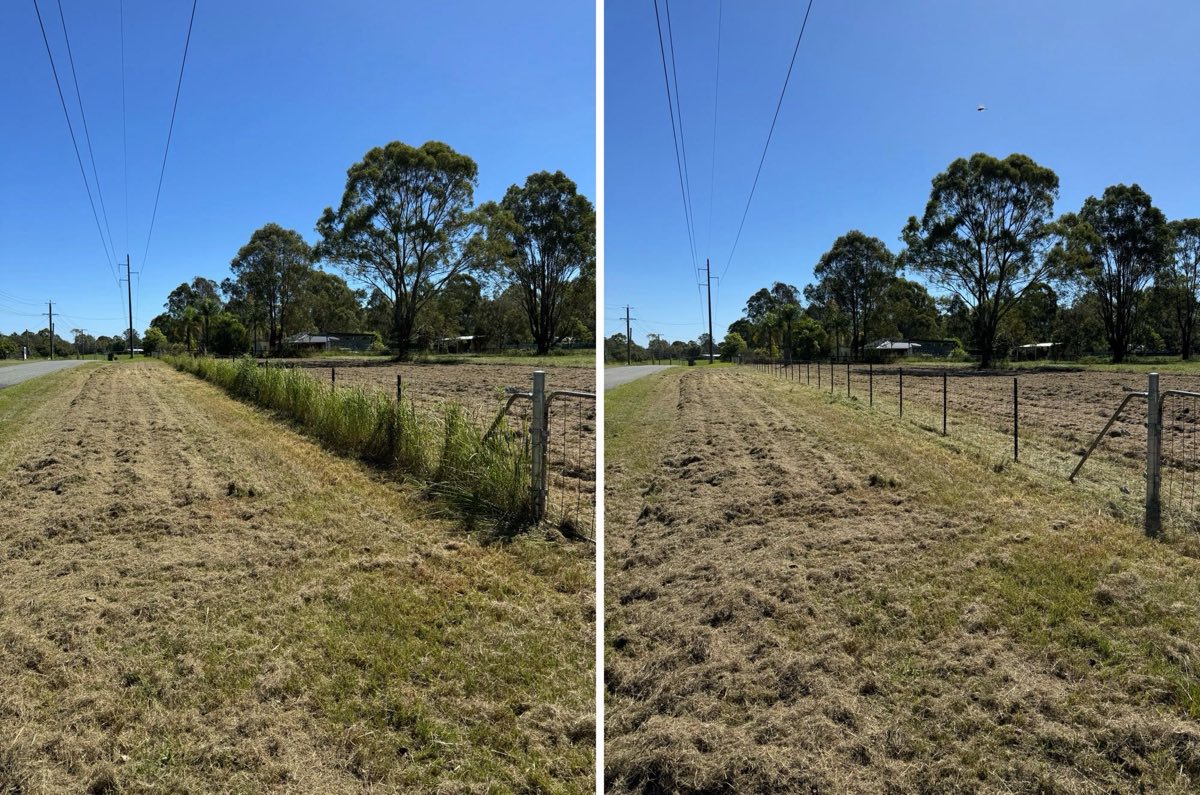
Weed management for Logan City acreage
We control invasive species and unwanted vegetation across large rural properties. We combine mechanical control with prevention and restoration to protect native ecosystems, productive land and property value.
- ✓ Invasive species kept under control across large areas
- ✓ Native plants and ecosystems protected
- ✓ Noxious weed control duties met, with records to show it
- ✓ Lower long-term control costs through early action
- ✓ Pasture and land value protected
Large-scale weed management
We provide expert control of invasive species and unwanted vegetation across large rural properties. Our integrated approach pairs mechanical control with sustainable prevention, so we protect native ecosystems, farm productivity and land value at the same time.
For regular work we use quiet electric Kress tools. For dense or overgrown ground and acreage up to 2 acres, we use a petrol Bobcat zero-turn mower with a 36-inch deck.
Weed management benefits
- ✓ Ecosystem protection: We help preserve native plant communities.
- ✓ Productive land: We keep pasture and farming land in good shape.
- ✓ Legal compliance: We help you meet noxious weed control duties.
- ✓ Property value: We protect and improve your land investment.
- ✓ Lower long-term cost: Early action keeps future control costs down.
Our approach
- ✓ Integrated weed management principles
- ✓ Mechanical and cultural control methods
- ✓ Species-specific targeting
- ✓ Prevention and early intervention
- ✓ Sustainable, long-term solutions
Australian weed classes and control priority
We tailor control to each weed class, from the highest national priority through to garden escapes and aquatic species.
Weeds of national significance
Highest priority invasive species that need prompt control.
- ✓ Lantana (Lantana camara)
- ✓ Prickly pear (Opuntia species)
- ✓ Blackberry (Rubus fruticosus)
- ✓ Serrated tussock (Nassella trichotoma)
- ✓ Parthenium weed (Parthenium hysterophorus)
Declared noxious weeds
Legally controlled species with set management duties.
- ✓ St John's wort (Hypericum perforatum)
- ✓ Scotch broom (Cytisus scoparius)
- ✓ Gorse (Ulex europaeus)
- ✓ Giant Parramatta grass (Sporobolus fertilis)
- ✓ Cat's ear (Hypochaeris radicata)
Environmental weeds
Species that threaten native ecosystems and biodiversity.
- ✓ English ivy (Hedera helix)
- ✓ Japanese honeysuckle (Lonicera japonica)
- ✓ Privet species (Ligustrum)
- ✓ Asparagus weeds (Asparagus species)
- ✓ Wandering jew (Tradescantia fluminensis)
Agricultural weeds
Species that reduce pasture quality and livestock output.
- ✓ Capeweed (Arctotheca calendula)
- ✓ Wild radish (Raphanus raphanistrum)
- ✓ Annual ryegrass (Lolium rigidum)
- ✓ Silver grass (Vulpia species)
- ✓ Dock species (Rumex species)
Garden escapes
Ornamental plants that have turned invasive in natural areas.
- ✓ Tree of heaven (Ailanthus altissima)
- ✓ Cotoneaster species
- ✓ Mirror bush (Coprosma repens)
- ✓ Polygala myrtifolia
- ✓ Pittosporum undulatum
Aquatic weeds
Waterway and wetland species that need specialist control.
- ✓ Water hyacinth (Eichhornia crassipes)
- ✓ Alligator weed (Alternanthera philoxeroides)
- ✓ Willow species (Salix species)
- ✓ Arrowhead (Sagittaria species)
- ✓ Salvinia (Salvinia molesta)
Mechanical weed control methods
Large-scale cutting and slashing
Strategic timing
- ✓ Cut before flowering to stop seeding
- ✓ Target early growth for the most impact
- ✓ Match work to each weed life cycle
- ✓ Pick the right weather window
- ✓ Use repeat cutting for perennial species
Equipment selection
- ✓ Heavy-duty slashing for dense growth
- ✓ Mulching heads to process material on site
- ✓ Flail cutting for rough terrain
- ✓ Brush cutters for selective work
- ✓ Larger attachments for woody weeds
Selective removal and grubbing
Root system removal
- ✓ Remove whole plants, including roots
- ✓ Stop vegetative regrowth
- ✓ Cultivate soil to expose remaining roots
- ✓ Follow up on any regrowth
- ✓ Rehabilitate the site after removal
Precision targeting
- ✓ Remove single plants in sensitive areas
- ✓ Protect native species during removal
- ✓ Keep soil disturbance to a minimum
- ✓ Stage removal to prevent erosion
- ✓ Replant straight away where it helps
Integrated weed management
Prevention
Stop weeds before they establish.
- ✓ Early detection and quick response
- ✓ Hygiene and clean-down protocols
- ✓ Vehicle and equipment cleaning
- ✓ Monitoring and surveillance
- ✓ Education and awareness
Control
Actively manage existing weed populations.
- ✓ Mechanical cutting and removal
- ✓ Stronger competition from desired plants
- ✓ Support for biological control agents
- ✓ Strategic grazing management
- ✓ Physical barriers where useful
Restoration
Bring treated areas back with desirable species.
- ✓ Re-establish native species
- ✓ Improve and renovate pasture
- ✓ Restore soil health
- ✓ Plant competitive ground cover
- ✓ Monitor and maintain over time
Regional weed management challenges
Tropical north
- ✓ Rapid growth and spread
- ✓ Year-round growing conditions
- ✓ High rainfall weed pressure
- ✓ Lantana and invasive grasses
- ✓ Rubber vine and mesquite
- ✓ Wet-season access limits
Arid regions
- ✓ Drought-adapted invasive species
- ✓ Prickly pear and other cacti
- ✓ Scattered water-point management
- ✓ Grazing pressure and disturbance
- ✓ Limited access and remoteness
- ✓ Erosion control needs
Temperate forests
- ✓ Shade-tolerant invasive species
- ✓ Blackberry and ivy infestations
- ✓ Steep terrain and access limits
- ✓ Native vegetation protection
- ✓ Seasonal weather restrictions
- ✓ Wildlife habitat care
Coastal areas
- ✓ Salt-tolerant invasive species
- ✓ Difficult coastal access
- ✓ Dune stabilisation balance
- ✓ Marine environment protection
- ✓ Tourism and recreation impacts
- ✓ Tidal and weather timing
Weed life cycle and best control timing
We time control to hit each weed when it is most vulnerable, which lifts results and lowers cost.
Seedling stage
- ✓ Most vulnerable period
- ✓ Minimal energy reserves
- ✓ Easy mechanical removal
- ✓ Stops establishment
- ✓ Cost-effective intervention
Vegetative growth
- ✓ Active energy allocation
- ✓ Good time to deplete reserves
- ✓ Repeat cutting works well
- ✓ Suppresses competition
- ✓ Interrupts steady growth
Pre-flowering
- ✓ Peak energy investment
- ✓ Critical timing for control
- ✓ Prevents seed production
- ✓ Slows population growth
- ✓ Interrupts reproduction
Post-flowering
- ✓ Prevents seed dispersal
- ✓ Depletes energy reserves
- ✓ Prepares for next season
- ✓ Targets perennial roots
- ✓ Sets up follow-up treatment
Our weed management process
Property assessment and mapping
We survey the site, identify species, map the infestation and set priority areas.
Management strategy
We build an integrated plan with species-specific methods, a timing schedule and clear success measures.
Systematic work
We carry out control measures with the right equipment and method for each weed.
Site restoration
We rehabilitate treated areas with native species and competitive planting.
Monitoring and follow-up
We keep watch, check results and adjust the plan as the site responds.
Legal requirements and compliance
Legal obligations
- ✓ Noxious weed control: State and local government requirements
- ✓ Duty of care: Responsibility to prevent weed spread
- ✓ Environmental protection: Native vegetation conservation
- ✓ Notification: Reporting of declared species
- ✓ Management plans: Documented control strategies
Documentation and reporting
- ✓ Treatment records: Detailed record of each activity
- ✓ Progress monitoring: Regular assessment reports
- ✓ Compliance evidence: Proof you have met legal duties
- ✓ Cost records: Financial records for tax purposes
- ✓ Success measures: Tracking of measurable outcomes
Benefits of professional weed management
Ecosystem protection
We preserve native biodiversity and prevent damage to natural ecosystems.
Cost effectiveness
Early action and professional management keep long-term control costs down.
Compliance assurance
Professional service helps you meet legal duties, with the records to prove it.
Seasonal weed management calendar
Spring (Sep–Nov)
- ✓ Control emerging annual weeds
- ✓ Act before flowering
- ✓ Run early-detection surveys
- ✓ Target perennial weeds
- ✓ Plant restoration species
Summer (Dec–Feb)
- ✓ Manage summer annuals
- ✓ Prevent seed production
- ✓ Carry out follow-up treatments
- ✓ Focus on access and safety
- ✓ Run monitoring programs
Autumn (Mar–May)
- ✓ Control the second growing season
- ✓ Prevent autumn seeding
- ✓ Target perennial roots
- ✓ Carry out site restoration
- ✓ Prepare for winter
Winter (Jun–Aug)
- ✓ Manage winter annuals
- ✓ Remove woody weeds
- ✓ Plan and map next year
- ✓ Service equipment
- ✓ Develop the season strategy
Our service windows
We book work into set windows on your chosen day. We cannot give an exact arrival time, but we guarantee the work is done within your chosen day and window. This suits owners who are at work during the day.
"I highly recommend this business. Matt is an excellent communicator and had our quote and job done efficiently. There was no stuffing around, he was straight to the job, got the work done and was finished."
Ready for professional weed management?
Protect your land and native ecosystems with expert large-scale weed management. Contact Matthew Sweet for a free quote. We respond within 2 hours.
Acreage Services
Get in touch
Matthew Sweet – Director, EcoMow Sustainable Gardening
Other Acreage Services
Paddock Maintenance
Regular paddock slashing, topping and maintenance for rural properties.
Learn more →Firebreak Services
Essential firebreak creation, clearing and maintenance for property protection.
Learn more →Fence Line Clearing
Professional fence line clearing to maintain access and prevent damage from overgrowth.
Learn more →Loading transformations…
Why owners trust EcoMow
Years of business experience behind the service
Public liability insurance
Typical quote response time
Genuine reviews from Logan City clients